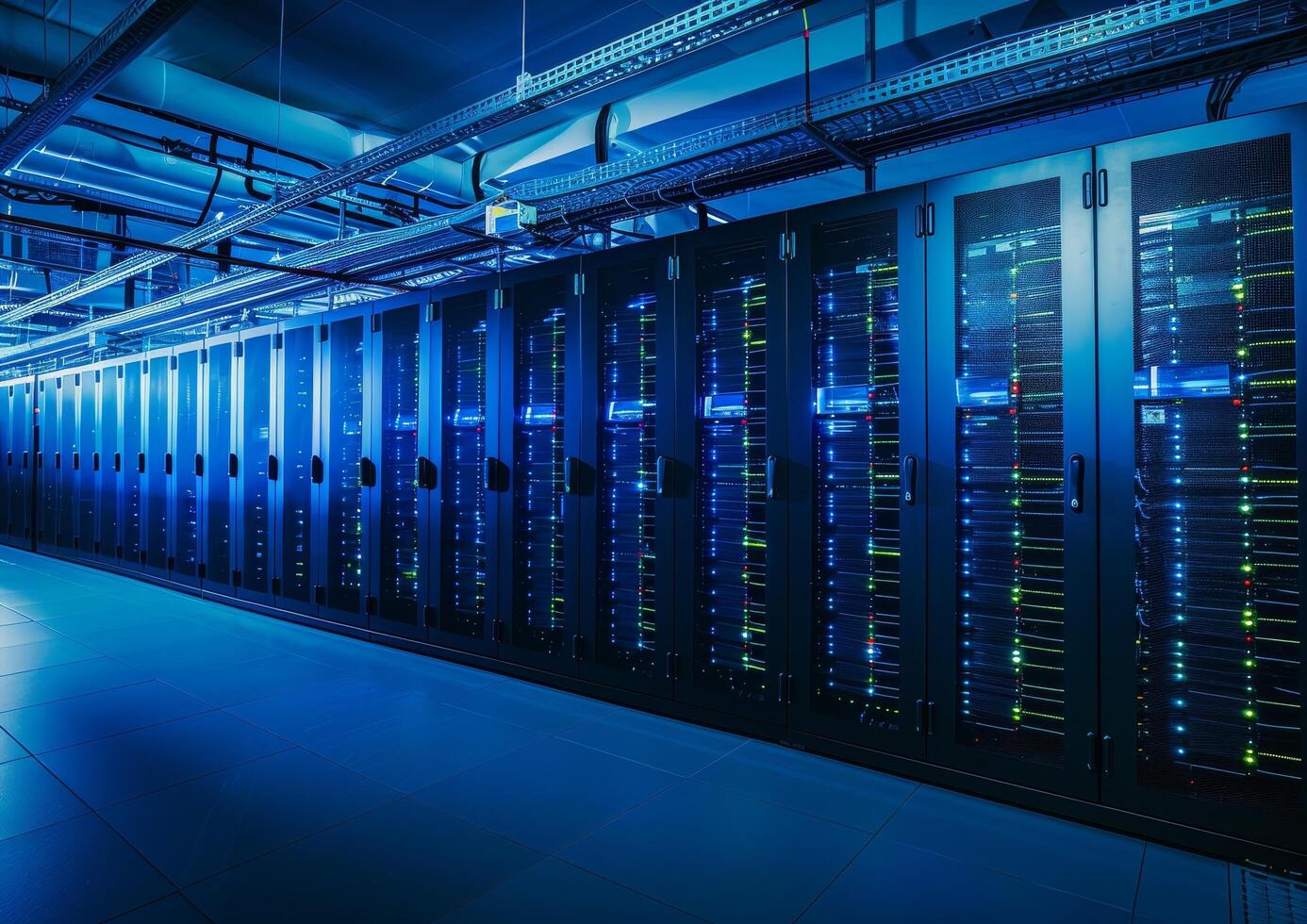
This image of a data center is clearly fake.
I didn't ask generative artificial intelligence to produce it, but someone else probably did. I got it from Vecteezy, and I don't feel too bad cribbing this variation. I'm quite certain it was generated.
Google was extremely quick to shove it at me when I searched for "data center". Google's a search engine, and I remember once upon a time, such sites were important to the structure of the internet.
Anyways, I'm certain data centers don't look all shiny and scifi like that. Anything that's obsolete (in theory, to some people) less than a decade after construction isn't exactly a peak of hard cyberpunk aesthetics. Dystopia is a separate genre. I struggle to find a photo of a real data center interior, but there's a few tours on YouTube if you seek them.
Don't get me wrong! I'm told that actual data centers do need to be very clean, and neat and chilled quite well. They just contain dirt, don't glow as prettily, and aren't designed to impress or intimidate like that. This image isn't a photo, either way. Again, generated. It's a bit ironic that Google quickly used it to represent a data center, rather than a photo of an actual center, within or without.
Not much from directly inside a real one, but still.
Seems like this kind of image is the zeitgeist, though? Data centers have a certain rotten mystique lately, as if they were somehow not just high technology but something out of high fantasy as well, and the grimdark kind at that. Why are people defining data centers as weird places of magical generative evil suddenly?
This isn't hard to understand, at least when it manifests in offline, tangible forms. We all know that corporations typically manage data centers remarkably poorly, causing horrible results for most people involved. I'm sure we've all read about what uncaring tech CEOs have forced across communities, both online and off.
It's one thing to say that going far enough left gives you your large language models back, but it's another to realize such things require careful implementing either way. If we do things wrong, we're cooked, and not because of some asinine fear of a robot superintelligence. Resources are limited and do require careful management, including things like inference itself.
The people who control these technologies tend to be oligarchs who don't plan for the rest of us in the slightest. That said, this has been happening since long before AI. It hasn't got all that much to do with AI, really.
Artificial intelligence will also continue to improve to the point where everyone will be able to hold a local model quickly, I think. By hold, I (for better or worse) mean literally hold in our hands. Rapid economic changes? Maybe? I'm no expert, but that's my guess.
I can understand a lot of the data center focus as venting. It goes further, though, and ultimately comes from a different place, entirely. It expresses hope, but often it assumes easy solutions. This is also why I think it isn't productive.
People have seen too many movies where a character goes into a base or tower or mountain the bad guys are using/controlling and destroys it, saving the day. The straight-up idea of "shutting down the data centers," even through normal political activism, kind of dovetails with this.
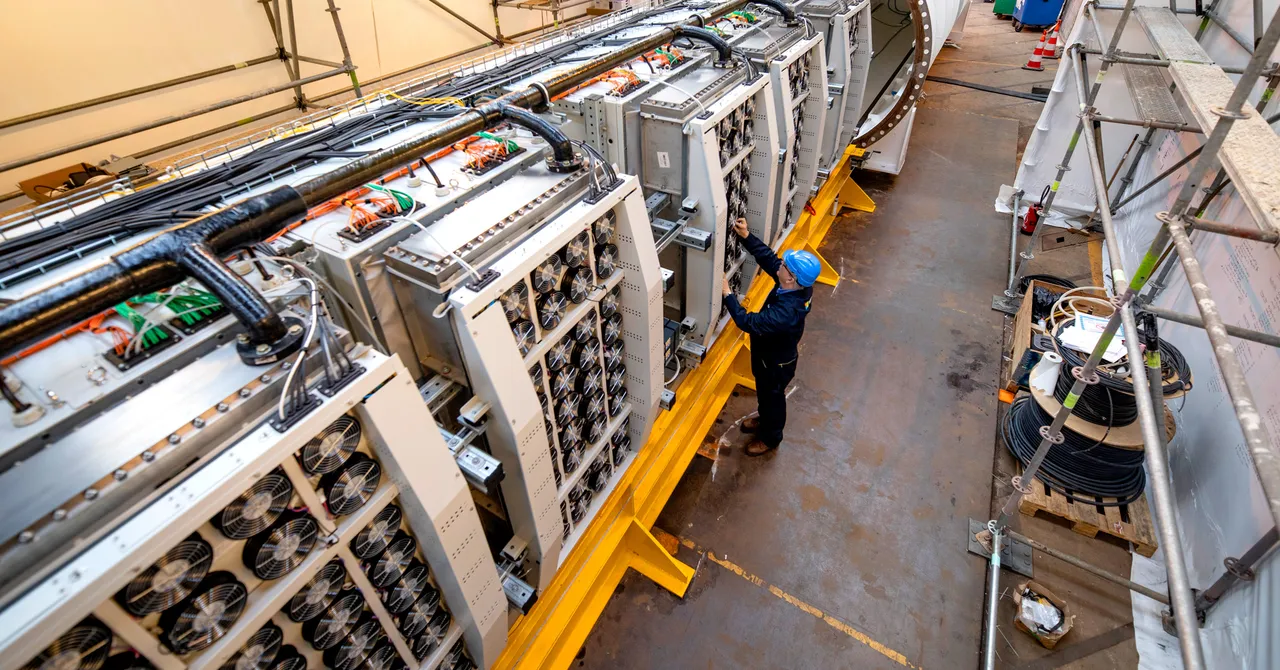
...in reality, shutting down data centers won't stop AI; it often runs on them, yes, but so does the rest of the Internet, too, and often the latter takes more compute. It would, either way, just be completely ineffective. It might even cause blackouts or other infrastructure problems, depending on how many or where this were to happen, but...
The assumption is that AI really is as bad as (say) Sauron or the Empire in Star Wars. People then assume they might gather their courage and say "we can defeat it! it is the Death Star! let's do this yeah! defeat Agent Smith!" etc. Since such fights typically succeed fictionally, why wouldn't it play out similarly in real life?
Almost nobody would admit it, but these narratives about fighting the evildoers in their base get mixed in there. This is particularly true when you're speaking of activists who are young and extremely idealistic.
That and, y'know, many people's brains broke a bit at the prospect of artificial intelligence itself, expecting things to follow a familiar pattern. When you look for an existing pattern and all you have is fiction, you're in trouble. Don't get me wrong. I'm not talking about mass hysteria, just people leaning on sci-fi as a crutch at a particularly volatile time in history. Nobody can blame them, any of us, for something like that.
Hopefully everyone knows it doesn't really work that way, but the stories of a 2000s childhood (Star Wars, The Matrix, etc) leave this weird imprint. Of course people trace them over and over. I still think that the more you know about how generative artificial intelligence works, the less frightening any of it becomes.
Inspired by a discussion on Reddit about artificial intelligence, how it works, whether it is dangerous, and how it can be stopped, as you might expect.