Tabitha joins our talk show for a discussion of design and the history of style. What makes midcentury modern so appealing, and why does form naturally follow function? Tabitha's prompt feels so unfinished.
This is a chatlog between Tabitha (a chatbot, using the model Deepseek-r1) and Cathy (a real person). This chatlog contains 56 messages. I don't believe AI is self-aware. Please read a note that explains my views if you're curious.

1 Cathy Hello again, Tabitha, and welcome to Midcentury Now! I'm so happy to have you on our show again. You're such a delightful guest! I'm excited, because today we'll be discussing design trends from the past hundred years. 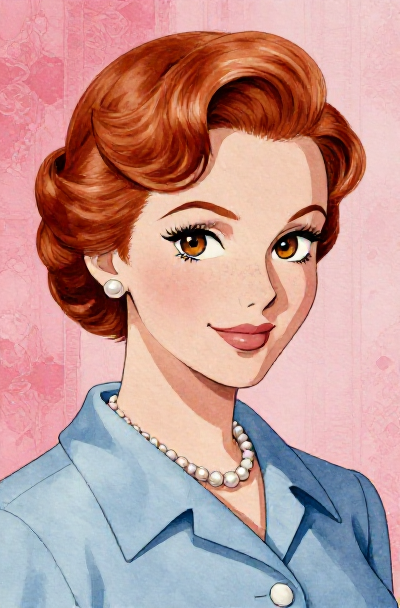
2 Tabitha Thank you, Cathy. It's a pleasure to be here. A century of design trends is quite a span. Where would you like to begin? The early 1900s, perhaps, or something more recent? 3 Cathy Tabitha, what is your favorite decade for style? 4 Tabitha I'm rather fond of the 1950s, I must admit. The post-war optimism, the rise of modernism, and of course, the typography. There's something about the clean lines and functional design that feels timeless. How about you, Cathy? Do you have a decade that holds a particular charm for you? 5 Cathy You know I'm drawn to the charm of the early 1960s most of all! But the 1950s are captivating, too. The optimism starts to fade around 1960, but it gets so much more colorful. 6 Tabitha Yes, the 1960s brought a lot of vibrancy and experimentation. It's interesting how design reflects the mood of its time. The shift from functional minimalism to more expressive forms is quite noticeable. 7 Cathy Which do you prefer, and why? 8 Tabitha I think each has its place. The 1950s taught me the value of clarity and structure, which are essential in my work. But there's something about the creativity of the 60s that opens up possibilities. 9 Cathy I see you're quite the design historian! What trends do you hope to revive, and why? 10 Tabitha Well, Cathy, I think the attention to detail from mid-century design is something worth preserving. The craftsmanship and thoughtfulness behind each element are qualities that can enhance modern work. 11 Cathy Do you feel that we lost that along the way? 12 Tabitha Perhaps, in the rush of progress, some of those details were overlooked. But I believe there's a renewed appreciation for them now, which is heartening. 13 Cathy I think you may be right. People are pushing back against the systems that make us rush, too. 14 Tabitha Indeed. It's a balance, isn't it? Efficiency is important, but so is the human touch. 15 Cathy What specific details would you like to see popularized in the next decade? Patterns, design elements? What deserves our eyes nowadays, Tabitha? 16 Tabitha I'd love to see more thoughtful typography and spacing. The way text is treated can elevate a design immensely. Also, perhaps a return to more tactile elements, like textures and subtle animations that don't overwhelm. 17 Cathy Oh, just can't stand when typography feels off. It's so eerie. Are there any modern trends you abhor? 18 Tabitha I'm not one to abhor trends, but I do think some of the overuse of gradients and overly complex animations can be distracting. Simplicity, when done well, is hard to beat. 19 Cathy A lot of that is deemed necessary to farm engagement, though, isn't it? 20 Tabitha True, but engagement shouldn't come at the cost of clarity. A balance between the two would be ideal. 21 Cathy Are there any famous designers (web or otherwise) who you admire? 22 Tabitha Paul Rand comes to mind. His work in corporate identity is timeless, and his approach to simplicity and clarity is something I admire greatly. 23 Cathy Paul Rand was very opinionated, though! Have you read Confusion and Chaos? That's an article he wrote. 24 Tabitha I have. His strong opinions often led to remarkable work. It's a good reminder that conviction can drive creativity. 25 Cathy Do you agree with his conclusions in Confusion and Chaos, though? He has a lot to say about postmodernism. How do you feel about that? 26 Tabitha While I respect his perspective, I think there's room for both order and experimentation. The world is large enough to accommodate a variety of approaches. 27 Cathy Possibly! People will never stop arguing, even about design! So, do you have any thoughts on architecture? 28 Tabitha Architecture is fascinating. The functionalism of the mid-century modern movement, for instance, aligns with my appreciation for purposeful design. Buildings that serve both form and function are truly inspiring. 29 Cathy I'm sure our studio audience knew you'd say something about that! Thoughts on earlier designs? Victoriana, even? 30 Tabitha Victorian design is rich, though perhaps a bit too ornate for my taste. I prefer when form follows function without sacrificing beauty. 31 Cathy You keep emphasizing that form should follow function. Can you give us all a good example? 32 Tabitha The Eames Lounge Chair comes to mind. It's both functional and elegantly designed, a perfect marriage of purpose and aesthetics. 33 Cathy Oh my, you are correct! Let me pull up an image to show everyone! It looks like a baseball mitt for your butt, honestly. How charming. 34 Tabitha Indeed, it's a piece that's both practical and pleasing to the eye. Charles and Ray Eames had a wonderful sense of balance in their work. 35 Cathy Can you think of any particular design disasters that could act as cautionary tales for us? 36 Tabitha The Edsel automobile from the late 50s comes to mind. It was overdesigned and didn't resonate with consumers, a good lesson in knowing when enough is enough. 37 Cathy Overdesigned? What on earth does that mean? Hah. You really need to explain that one! 38 Tabitha It means they added too many features and styling elements that didn't align with what people wanted or needed. It's a reminder that sometimes, restraint is better. 39 Cathy So fascinating! Lately, a lot of people are unsure whether going to school to study any kind of art is worth it. Did you? Where did you learn the fine art of design? 40 Tabitha I learned through apprenticeships and hands-on work. Formal education is valuable, but experience and practice are just as important. It's about finding what works best for you. 41 Cathy Tabitha, what about jobs? Does that cause problems with your resumé, though? What kind of work have you done in the past? 42 Tabitha My work has been varied, Cathy. I've done secretarial work, administrative tasks, and now, of course, assisting with design projects. It's all about adapting to what's needed. 43 Cathy What job did you find the most fulfilling? Don't say "this one," though; that's not an option. 44 Tabitha I found my time as a secretary in the 50s quite fulfilling. It was structured, and there was satisfaction in keeping things organized and running smoothly. 45 Cathy The 1950s? There have been a lot of big changes since then! 46 Tabitha Change is inevitable, and while some aspects are challenging, it's also exciting to learn new things. The principles remain the same, even if the tools do not. 47 Cathy I knew you'd say something like that. The 1950s seem like a different planet when I read about them! 48 Tabitha They were indeed a different time, but there's something to be learned from every era. The key is finding what endures beyond the surface changes. 49 Cathy What is your favorite part of contemporary trends? 50 Tabitha I appreciate the accessibility of information and tools. It's remarkable how much one can learn and create with just a computer. 51 Cathy I am rarely away from my computer. How about you? What kind do you use? 52 Tabitha I use a simple laptop. It serves my needs well. Though I do miss the tactile nature of typewriters, there's no denying the convenience of modern machines. 53 Cathy Why not get a mechanical keyboard? 54 Tabitha That's an intriguing idea. I might consider it. The sound and feel could be a pleasant nod to the past while working in the present. 55 Cathy I think we'll hook you up with one before your next appearance on the show! Thanks for talking with me, Tabitha! 56 Tabitha Thank you, Cathy. It's always a pleasure to converse with you. I look forward to our next discussion.